Sunday, January 6, 2013

Life in the German Democratic Republic

This story has been told by my cousin, Lauren. Since travel to Greece requires at least one stop, why not have your stop be Berlin. I was so impressed at Lauren's husband's generosity and kindness during my stay in Berlin. It gave me an opportunity to experience life in Germany post the Berlin Wall. So enjoy this true, yet entertaining story of Chris.

 Chris was born in 1947 and was the youngest of three children. His mother was a divorced high school teacher. This single parent had a daughter and two sons who lived with her in a little town called Henningsdorf. This town is on the outskirts of Berlin. Chris' mother found that taking care of three children was quite taxing so she employed a nanny during the day to take care of the two-year old child, Chris. His mother and her two children then moved to West Berlin while Chris stayed with his nanny in Henninsdorf.

The cold war heated up. Berlin was the center of tension in Germany. A few years later, Chris started the first grade. His mother wanted him to go to school in West Berlin. Chris crossed the border every day alone to go from Henninsdorf to West Berlin and then in the reverse. A year later when Chris was seven, the East German Authorities visited his nanny and demanded a decision as to if he was going to stay in the east or go to the west. Chris was to continue to stay in the east until high school. She attempted to convince his mother of this plan.

In 1961, during his sleep, the Berlin Wall was erected to prevent the further flow of people who fled from the east to seek new lives in the west. Chris, a fourteen year old boy, has remained with his nanny who was sixty-nine years old. Their relationship was a bit strained. She was old and Chris was strong- willed and in the midst of adolescence.

Chris' mother began to urge the nanny to apply for a family reunion through the International Red Cross. She realized that the political situation in East Germany was a time bomb which could easily explode at any given moment and knew it was of fundamental importance to get that child out of the East asquickly as possible. Therefore, Chris' mother followed this advice to save her child from an uncertain destiny in the east.

Ironically, two years after the Berlin Wall was built, Chris was able to legally leave his nanny and be reunited with his mother, sister and brother. It was a truly remarkable and unusual case due to the age of Chris' nanny as well as his age. If she had been younger, the authorities in the east would never ave allowed him to leave for the west. In this case, the East German authorities were afraid that the authorities were afraid that his nanny might soon die or become incapable of caring for him any longer. If that happened, Chris might have been doomed to live in an orphanage.

East Germany made their decision based on an international recognition at that time and wanted to present itself as a civilized state.

Amazingly enough, one and 1/2 years later, Chris left the east and he started his senior year as a high school exchange student in Santa Monica, California. What an ending to Chris' unique life in GDR.
by Roberta Mark Engel

Wednesday, September 19, 2012

The Prosperity of Corinth


Where is Corinth situated? It is situated on a narrow isthmus connecting the Saronic and Corinthian gulfs. It measures as the shortest route from the eastern Mediterranean to the Adriatic and Italy. Do you know about the prosperity of Corinth? Take a look at Ancient Corinth, Acrocorinth, and the Corinth Canal and discover these answers.  Raul is from Los Angeles says “With economic problems all over the world, it is great to visit the sites of Corinth.  Los Angeles is such a crowded city so it is a pleasure to come to a country known for its beauty and serenity.”  Come walk in his footsteps.


This Isthmus of Corinth joins the Peloponnese with the mainland. Do you know the history of Corinth? According to the history books, Philip II of Macedonia conquered Corinth in 338 BC.


The town gained a reputation of lack of morality. Even though, the beauty and prosperity of the city was revealed by excavations. Enjoy the walk on The Lechaion Way  and find out why.  Ancient Corinth is open from 8:00 -20:00 during the summer, 8:00 -15:00 during the winter and is 6 Euros which includes admission to the museum. The Archaeological Museum of Ancient Corinth contains a number of artifacts of religious interest. It is free on Sundays between Nov. 1 and March 31.


The Acrocorinth 4 km (2.5 miles) is a fortified city above ancient Corinth. This became one of medieval Greece's most important fortresses which can now be reached by a road which climbs the western face of the hill from the lower town.


And what about the Corinth Canal? According to Pilgrims Tours, "Stormy Cape Malea Emperor Nero began construction and the project was completed in 1893. The 23 meter (75 foot) wide canal is considered obsolete in with its capacity. Ta'naro was one of the dreaded capes of antiquity; rather than risk sailing around it, boats would be unloaded one shore of this isthmus, dragged the 6km (4 miles) across on the diolkos (paved slipway), and then refloated and reloaded." “But, it is enjoyable to see ships travel through the Corinth Canal” says Raul.   


The Corinth Canal is one hour from Athens and one hour from the Peloponnese which makes it convenient for touring. I hope you had a pleasurable day touring with us. It is historical, convenient, and entertaining all a short drive from Athens.  Just ask Raul.


Saturday, August 25, 2012

Doorway to the Balkans


What is the principal mystery of Northern Greece? It is Greece's second largest city, Thessaloniki. Its surrounding villages, namely Vergina (the royal capital of Macedonia) give Northern Greece its culture and history. Did you know that many travelers pass through these villages en route to other European cities, bypass its oldest and finest Byzantine churches, impressive ancient fortifications, fascinating museums, adorable street cafes and colorful markets? Come join us through the doorway to the Balkans.

Thessaloniki is a busy, vibrant city and it is Greece's second major economic, industrial, commercial and transportation hub in southeastern Europe. It was founded by King Cassander of Macedona in 315 BC and named after his wife, who was Alexander the Great's half-sister, Thessaloniki. Unfortunately, in 1917, the town was destroyed by a single fire which was accidentally caused by French soldiers who were camping there. But, in 2004, the same city hosted some of the football events of the summer Olympics.

Spend your days at the beach or at the city centre. The waterfront is a major attraction of Thessanoliki. The promenade of Nikis Avenue runs from the White Tower to the giant palace that is now on a ferry terminal. In addition, the city center is close to Aristotelous Square.

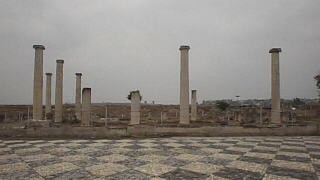
In addition, did you know that during the Ottoman era, Thessaloniki's Jewish communities (approximately 46, 000) were dominant until 1922? Pella, Veria and Vergina which are on the Chalkidiki peninsula. 32 kilometers away from Thessanoliki is Pella. Pella is the birthplace of Alexander the Great and it served as a Palace of Macedonia. It has exquisite floor mosaics of original villas dating back to 4th century BC. Saint Paul even preached there.

Pella is located a few kilometers from Veria which also boasted a large Jewish community at one time. Veria is only 15 kilometers from Vergina.  Vergina is situated 47 kilometers southwest of Thessaloniki.  These museums house astonishing and priceless artifacts that belonged to the Macedonian civilization such as the Royal Tombs of Macedonia and King Phillipos (the father of Alexander the Great).

Thessalaniki has many museums with antiquities from its storied past. The ancient fortifications in Pella, Veria and Vergina are also steeped in history, once occupied by the Olympic Gods. The beaches of Chalkidiki are even accessible when you tour through the door to the Balkans.


Sunday, July 29, 2012

Hydra as a museum


Hydra is a picturesque popular Greek island in the Saronic Gulf. Look at the red-tiled houses and stone-paved narrow alleys. This gulf lies between the islands of Poros and Spetses, near the coast of the eastern end of the Peloponnese. Hydra is known as the "museum island" which has remained since the 1800's. Rich villas, artists, writers, and film makers still make their residences in Hydra since the sixties. The island still maintains a highly cosmopolitan character.

Some of the best spring and fall hiking are in Hydra and can be tailored for your interests. At Easter, the island is carpeted with flowers and has a reputation as one of the hottest Greek islands as it has very little shade.   But, in September, the weather is temperate.   It is worth the hike to The Profitis Ilias Monastery which is perched on the highest hill above the town.

Aside from the views from the monastery, every year there is a celebration of the famous fire of then Admiral Miaoulis which ends in the burning of a ship at sea. But, maybe you are interested in art? The yearly summer exhibition is at the Hydra's Melina Mercouri Gallery. The artist, Michael Lawrence is a native Californian contemporary painter and sculptor who was brought up and educated in Los Angeles.  And what a pleasure to see his paintings! “I have made Hydra my full-time residence for over a decade.  It gives me the opportunity to live and paint in beauty.  This is my world.”   It was enjoyable meeting another native Angelian from California who also has a residence in Greece.

How do you get to Hydra? Take a car ferry from Piraeus Harbor. It also leaves daily during the warmer months from Ermioni which is a small quiet harbor located on the eastern part of the Peloponnese and takes approximately 20 minutes versus the ferry trip of 3.5 hours.

Hotels are approximately 50 Euros or more per night. The Hydroussa Hotel and the Four Seasons are a couple of hotels for 80 plus euros per night. It might be worth the extra money to get luxury.

Did you hike, see the reenactment of the ship burning, see artwork from one of the resident artists? What about a hike? Whatever your preference, you enjoyed your stay on the island of Hydra.


View the below link which houses this article along with a slideshow.  Please subscribe to the site listed above or www.examiner.com/greek-travel-in-los-angeles/roberta-mark-engel.
http://www.examiner.com/article/hydra-as-a-museum

Sunday, June 3, 2012

Slideshow for Dry Well

http://www.examiner.com/slideshow/xiropigado-the-dry-well